
Can't Wait for 2026!
A look back at 2025, how I coped, and some sweet stories for the New Year

We are almost done with 2025, and I have to say I couldn’t be happier. To keep sane as our democracy unraveled, thousands of people were detained and deported, women’s rights were dismantled, universities were sued and harassed by Trump for bogus political reasons, a book on fascism by historian Timothy Snyder became a bestseller, Canadians loudly boycotted the U.S., travel became even more nightmarish and unpleasant, Obamacare subsidies were allowed to lapse, and Robert F. Kennedy, Jr. made measles a thing again—this must be the longest sentence I’ve ever written, and I just got started--I made some changes.
I pretty much stopped my consumption of mainstream media and cable news in service of my mental health. We cancelled our subscription to the Washington Post, and the print version of the LA Times. I didn’t not pay attention to the news. I did, but I was selective about what I read and how much. I scanned headlines to keep informed. I mostly stayed off social media, but I did subscribe to Substacks by writers and thinkers I admired: Anne Lamott, Roxane Gay, my friend Nina Burleigh, and William O’Connor’s about travel.
Instead of reading news that made me want to repeatedly shriek--and I do mean shriek--WTF?, I read stories about hope and people doing positive things. I read about the subjects I cover, like nature, indigenous culture and public health. To quiet my mind, I walked more, did more yoga, read more fiction and poetry, and worked less. I marched and chanted with thousands of other Angelenos at the No Kings protests. I stopped—and this was a big change for me--feeling compelled to travel every five minutes. Instead, I started a vegetable garden. I started doing strength training so my bones won’t break. (You should see my back muscles!) I also wrote a book proposal about malaria, which I’m now revising.
Wish me luck!
Mostly, I tried in the midst of this chaotic and upsetting year to focus on what I was grateful for. My children. My husband. My wonderful friends. And the incredibly strong and beautiful people of LA, who survived two horrific fires and traumatic ICE raids.
I might have mentioned this, so forgive me for repeating myself--I still think I’m in my youthful 40s. But two and a half years ago I nearly died of malaria, a disease that kills hundreds of thousands of African children a year. That’s the book proposal I’m revising. It’s rare you get a do-over at life. But I did. After I recovered, I did a lot of soul-searching. Why did I survive? What’s my purpose? What am I meant to do? I’m still working that out.
Meanwhile, I want to thank you all for reading and subscribing. It means so much to me that you feel my writing worth your time--and your money. I started this Substack six months ago because I felt there was a deep void, a superficiality and commercialism, to most travel writing. Especially with our fragile planet being plundered shamelessly for profit. And who better than me to fill it? It’s been so rewarding.
In the New Year, I’m going to start doing some fun interviews. I’ve got a story in the December issue of Outside, for instance, about these incredible Indigenous teenagers who were the first to kayak down the newly freed Klamath River. Wouldn’t you like to meet them?
Finally, I want to leave you all with some positive stories to end the year.
Here they are:
Speaking of the Klamath, Amy Bowers Cordalis (Yurok Tribe) has a memoir out called “The Water Remembers,” about her family’s efforts in the largest river reclamation project in American history to restore the river’s vital salmon population.
The Blackfeet Tribe’s historic relationship with the buffalo and their renewed ties is the subject of the documentary, “Bring Them Home.” Directed by Blackfeet siblings, the film is narrated by Oscar-nominated actor Lily Gladstone (Blackfeet).
Kenya has introduced “Journey Back to Eden 2026,” a cultural program designed to strengthen connections with the African diaspora. Developed partly by Kenya’s Ministry of Tourism, the program is geared to African-Americans, Afro-Caribbeans and people of African descent globally as a way to explore their heritage.
G Adventures has swapped its annual Where to Travel list focusing on “hot” destinations—a particular irritant of mine in the travel space--to something hopefully more meaningful called “Travel your heart out: Happiness List 2026.” Based on research, the new list centers instead on places and experiences that supposedly give travelers happiness, purpose and a sense of fulfillment. I haven’t perused the list yet, but I Iike the idea.
.
Many of my travel buddies have had the astounding experience of seeing gorillas in Rwanda. I was supposed to, but then the trip fell through. I don’t love zoos, but this news made me want to drive straight to the Los Angeles Zoo. A new baby gorilla was born there on Nov. 22, joining a family of critically endangered western lowland gorillas. The newborn is the zoo’s fifth great Ape birth. The baby hasn’t yet been named, but you can go see him/her.
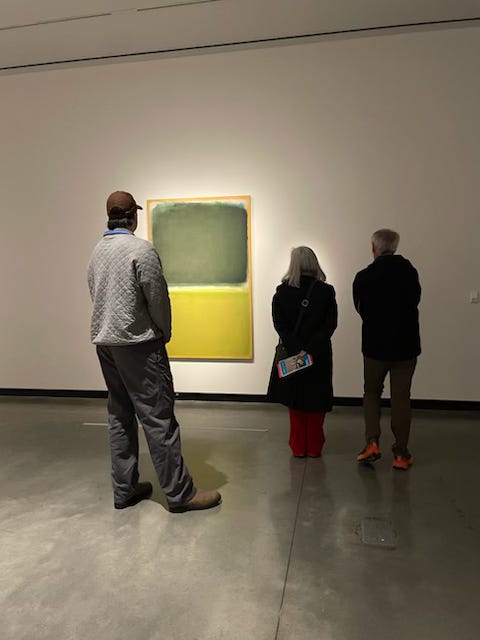
Finally, this past year, while museums were being battered by the Trump administration to erase their so-called DEI exhibitions and content, the Portland Art Museum bravely stood its ground. The museum recently underwent a stunning, nearly 100,000-sq.-ft. renovation, connecting its two historic buildings with the soaring glass Mark Rothko Pavilion. In doing so, the museum also elevated its exhibitions and focus on Native American and Black artists, works by women, with a particular lens on Oregon and Pacific Northwest artists. I toured the galleries over Christmas week with my daughter, her partner, and my husband. We came away inspired.
Great post, so positive. Thank you very much, Mona.
Recently visited the Portland Art Museum! So, so excellent! Cheers to you dearest Mona. Look forward to seeing you in 2026. Xx